A Quiet Place: Day One — Raw, Relentless Origin
Director: Michael Sarnoski | Industry: Hollywood
There’s an immediacy to A Quiet Place: Day One that’s almost punishing. Michael Sarnoski drops the franchise’s rules into a densely populated city and watches the carefully constructed silence of the original films shatter in a single, chaotic day. The result is less intimate family drama and more urban survival horror — loud in stakes even when the characters must stay quiet.
Lupita Nyong'o anchors the film with a fierce, physical performance that keeps you invested even when the film leans into spectacle. If you’re coming expecting a carbon copy of what made the first film so unnerving, prepare for something that shares DNA but lives in a louder, more crowded space.
The Setup
Set during the first terrifying hours of the extraterrestrial assault, the film follows Sam (Lupita Nyong'o), who navigates a suddenly hostile New York City as society collapses around her. The story tracks her attempts to survive amid collapsing infrastructure, panicked crowds, and the ever-present threat of sound-based predators. Rather than center on the established Abbott family, Day One widens the lens to show how ordinary people react when the world goes silent and the rules they thought governed safety no longer apply.
Cast & Characters
Lupita Nyong'o carries the picture with a raw, kinetic energy — she gives Sam a texture of fear, stubbornness and resourcefulness that rarely lets the audience look away. Supporting turns are functional; Joseph Quinn and Djimon Hounsou bring necessary humanity to smaller arcs, but Nyong'o is the emotional engine. The film asks its performers to do a lot with body language and panic, and for the most part they deliver believable, often harrowing work.
Direction & Storytelling
Michael Sarnoski shifts the franchise from hushed family drama to a more kinetic, citywide panic. His pacing favors brisk, often unforgiving set pieces that trade the slow-burn dread of the original for immediate crisis management. Some sequences feel invigorated by that choice, while others lean on spectacle at the expense of quieter character beats. Sarnoski’s choices make Day One feel like a companion piece rather than a direct tonal twin to the earlier films.
Visuals & Audio
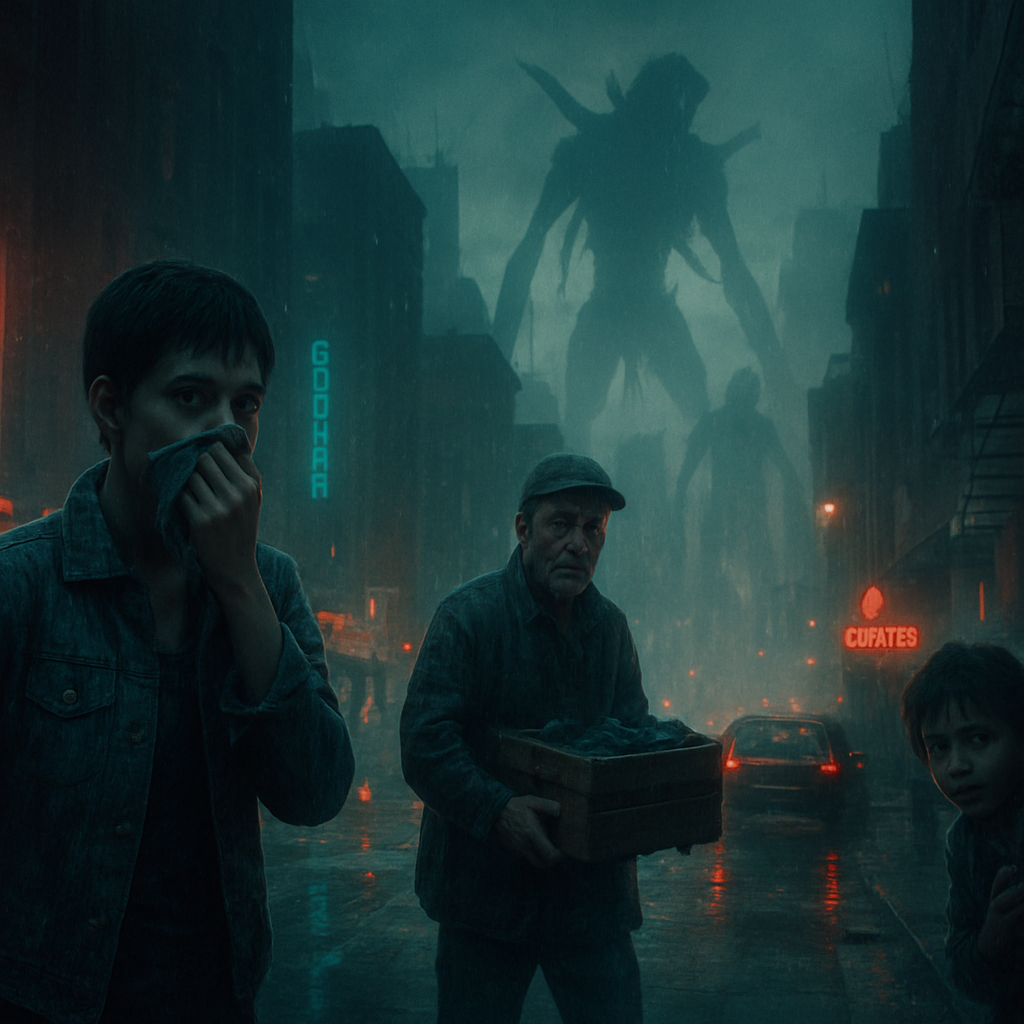
The cinematography throws the franchise into a claustrophobic urban palette: tight alleyways, reflective puddles and towering facades that dwarf fleeing people. The camera alternates between shaky, handheld urgency during crowd panic and steadier, watchful compositions in moments of forced quiet. Lighting tends to favor neon backlight and deep shadow, which amplifies the sense of a city transformed into an unwelcoming maze. It’s visually arresting even when it’s trying to unsettle rather than dazzle.
Sound is the film’s real weapon. The score and sound design work in tandem to squeeze tension out of the smallest noises, turning ambulances and distant screams into pulse-quickening cues. The movie relies less on melodic themes and more on an abrasive, textural soundscape that complements the chaos of the city. It’s less about memorable tunes and more about how audio shapes your sense of danger every second.
Final Breakdown
- Lupita Nyong'o delivers a gripping, physically committed lead performance.
- Sound design heightens suspense in inventive, unsettling ways.
- Urban setting retools the franchise’s rules for large-scale panic sequences.
- Several set pieces inject fresh, brutal imagination into the premise.
- Supporting characters get less development than the premise deserves.
- Shifts toward spectacle undercut the quieter tension that defined the original.
- Occasional tonal mismatch between intimate horror and blockbuster action.
A Quiet Place: Day One is a bold, uneven expansion of the franchise. It succeeds most when it tightens around individual survival moments and Nyong'o’s fierce central performance. When the film opens into crowd-driven chaos and larger set pieces, the emotional through-line blurs — but the sensory intensity rarely does. If you want a different taste of the A Quiet Place world — one louder, harsher, and more city-bound — this prequel delivers that experience on its own terms.
Frequently Asked Questions
Is A Quiet Place: Day One a prequel?
Yes. It depicts the opening hours of the alien invasion that sets the events of the original films in motion, focusing on a different set of survivors in a major city.
Do I need to have seen the other A Quiet Place films?
You don’t strictly need the earlier films to follow Day One, but fans will appreciate connective tissue and the way it reframes the franchise’s rules.
Is it as scary as the first film?
It’s scarier in short bursts and louder in scope, but its emphasis on urban spectacle means the brand of creeping dread from the original is less constant.