Buddy Review: Casper Kelly’s Wild Horror Comedy
Director / Creator: Casper Kelly
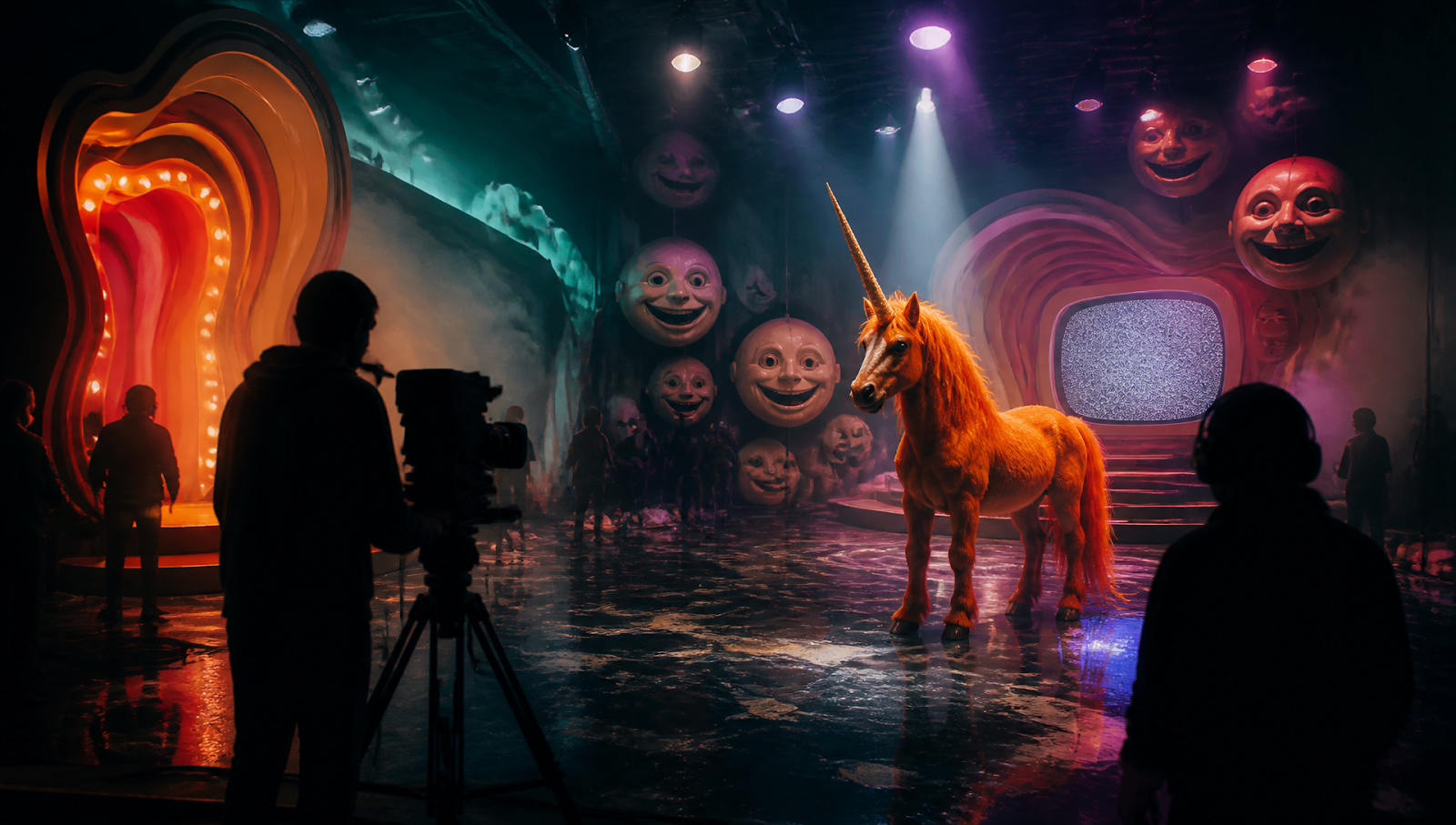
Buddy wastes no time telling you it is not interested in normal. Casper Kelly’s movie drops a magical, singing orange unicorn into a TV-show nightmare and then keeps twisting the idea until it feels funny, creepy, and slightly mean in the same breath. That strange mix is exactly why Buddy review chatter will be split, but for viewers open to something offbeat, it has a real charge. The film is messy in places, yet it is also committed to its own bad dream logic in a way that’s hard to shake.
The Setup
The setup is simple enough to follow, even if the world around it keeps slipping out of place. A cast is trapped in a surreal TV-show dimension, and the host of that space is a magical orange unicorn named Buddy. He sings. He performs. He becomes more unhinged as the film goes on. That premise gives the movie room to move between horror and comedy without stopping to explain every odd corner. What matters is the pressure building around the trapped cast and the way the show’s playful surface starts to rot underneath them.
Cast & Performances
The cast has to do a lot of work inside a story that keeps bending reality, and that’s where Buddy finds some of its strongest energy. Cristin Milioti gives the movie a grounded center, which matters because the film keeps surrounding her with chaos. Delaney Quinn adds a sharp sense of unease that fits the material well. Topher Grace, Keegan-Michael Key, Michael Shannon, and Patton Oswalt each bring different shades to the madness, and the film benefits from that variety. No one seems to be trying to play the same joke. Clint Howard, Eric Bauza, Sergey Zhuravsky, and Jonathan Yurco help fill out the world without letting it feel empty. The result is a cast that understands the assignment: stay alert, stay reactive, and never act like this situation is normal.
Direction & Tone
Casper Kelly directs Buddy like someone who knows the joke is funnier if it keeps getting worse. He leans into the TV-show setting instead of smoothing it out, which gives the movie a strange rhythm that feels both playful and threatening. The film works best when it lets scenes run a little too long, making the discomfort part of the comedy. Kelly also seems to understand that the orange unicorn concept could easily turn into a one-note gag, so he keeps shifting the tone just enough to stop that from happening. At times, the movie feels like it is daring you to bail. That risk helps it.
Visuals & Sound
The cinematography supports the film’s TV-show nightmare by making the space feel artificial in just the right ways. The setting has a staged quality that suits the story, and the camera often keeps that polished surface in view long enough for the unease to sink in. The movie doesn’t need huge visual scale. It needs a strange, boxed-in look, and it gets that. The design of the frame helps sell the sense that everyone is trapped inside someone else’s broken idea of entertainment.
The music has to carry a lot of the movie’s strange energy, and it does. The singing element is part of the concept, but the sound work is doing more than just delivering gimmicks. It helps the film keep its cartoon smile while the tension curdles underneath. The musical side never feels pasted on. It feels baked into the joke and the threat at the same time.
The early reveal sets the tone fast. Buddy is funny, but the movie makes sure the joke arrives with a little dread attached to it. That balance is the film’s main trick.
Once the trapped cast starts testing the limits of the TV-show dimension, the movie becomes more tense. The humor gets sharper because everyone is reacting to rules that don’t really help them.
As Buddy grows more demented, the film moves from oddball comedy into something closer to panic. This is where the horror part starts to matter more than the novelty.
The final stretch leans into the full surreal trap of the setting. It is the most chaotic part of the movie and also the clearest sign that Kelly is not trying to make this easy to digest.
The closing moments keep the film’s twisted tone intact rather than smoothing things out. It doesn’t aim for comfort, and that feels right for this movie.
Pros & Cons
- Strong central absurdity that stays entertaining
- Cristin Milioti and the ensemble keep the movie grounded
- Casper Kelly commits to the surreal tone
- The blend of horror and comedy lands often enough to matter
- The sound and staging support the weird premise well
- The movie can feel thin if you want a more defined plot
- Some viewers may find the surreal style repetitive
- The film leans more on mood than on character depth
Final Verdict
Buddy is strange in a way that feels deliberate, not random. It may not be the easiest horror-comedy to settle into, and it doesn’t always give you enough structure to hold onto, but it gets a lot right by trusting its own twisted premise. The cast helps, the direction keeps the pressure moving, and the movie’s refusal to act normal becomes part of its appeal. I’d call it a sharp, uneven, very watchable oddity. Rating: 7.5/10.
Frequently Asked Questions
It is a horror-comedy with a surreal TV-show setup.
Casper Kelly directed the movie.
Not exactly. It mixes horror with dark, strange comedy and keeps shifting tone.
The runtime is 95 minutes.
Related Titles You Might Like
- Beetlejuice Beetlejuice
- The Menu
- Renfield
- Malignant
- Sorry to Bother You