The Shards Review: Style, Tension, and Unease
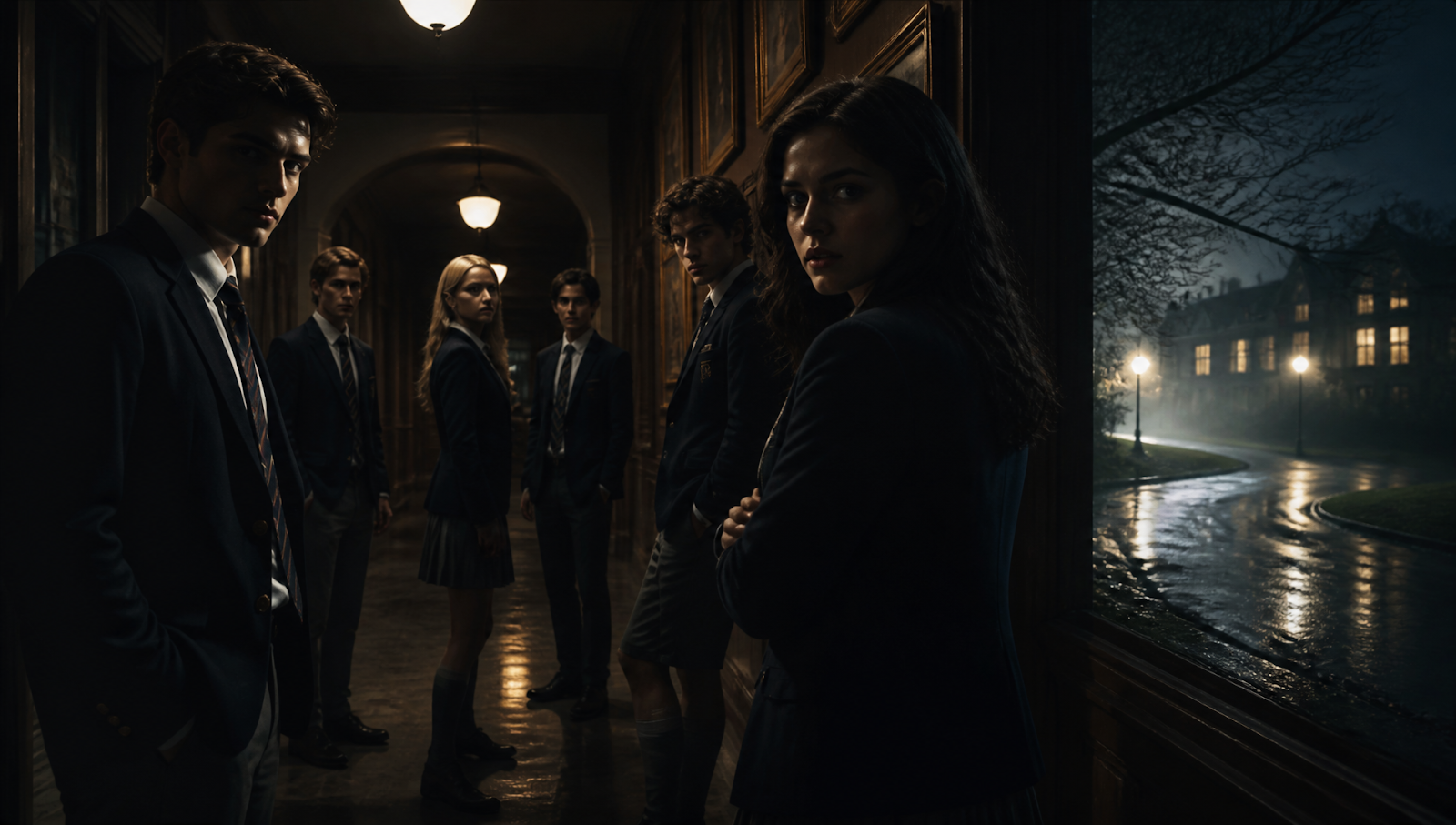
Director / Creator: Ryan Murphy, Bret Easton Ellis
The Shards opens with a feeling more than a plot beat. Even before the mystery tightens, the series makes the halls of Buckley feel like a place where every glance matters and every quiet pause says something. This The Shards review comes down to that mood: the show is strongest when it lets tension build in small social exchanges, and it’s less convincing when it leans too hard on its own mystery box. Still, as a recent FX and Hulu series with a sharp premise, it knows how to keep you watching.
The Setup
Set in 17-year-old Bret Easton Ellis’s final year at Buckley prep school, the series follows a world of rules, status, and private fear. The arrival of Robert Mallory unsettles that balance, especially as rumors and fear grow around a serial killer known as The Trawler. The setup is simple enough to follow, but the real pull is how the show uses everyday prep-school talk, awkward silences, and shifting loyalties to make the threat feel close. It’s not just about who the killer is. It’s about how fear spreads through a place where everyone is already performing.
Cast & Performances
Igby Rigney carries a lot of the early weight here, and he does it well. He gives the central role a nervous focus that fits the story’s constant sense of doubt. Kaia Gerber and Homer Gere add presence in scenes that depend less on big speeches and more on how people look at each other before speaking. Wes Bentley and Evan Rachel Wood bring a colder edge to the series, and that helps whenever the younger cast needs a sharper counterpoint. The best acting moments are not loud. They’re the ones where a conversation stops a little too soon, or where someone answers too neatly and makes the room feel less safe.
Direction & Tone
Ryan Murphy and Bret Easton Ellis seem most interested in control here, and that gives the series a strong shape. The direction favors slow pressure over fast shocks, which fits the material. When it works, the show feels like a social trap closing in. A lot depends on timing, and the series knows when to leave a silence hanging or let a polite exchange turn uneasy. The downside is that some scenes feel designed more for atmosphere than movement, so the story can stall when it should keep pushing forward. Even so, the tone is steady, and that matters in a mystery like this.
Visuals & Sound
The cinematography leans into clean, polished surfaces that hide something ugly underneath. That contrast suits the prep-school setting nicely. Bright spaces still feel guarded, and darker corners carry more weight than they should. The camera often seems to wait for people to reveal themselves, which works well in a series built on suspicion. It’s stylish without becoming showy, and that restraint helps the tension land.
The sound design does a lot of work here. More than a flashy score, the series seems interested in small audio cues that make silence feel loaded. That approach fits the conversations, where a pause can matter as much as a line. When the music does rise, it supports unease instead of trying to overpower it. It’s a smart choice for a story that depends on discomfort more than action.
Robert Mallory’s arrival is handled with restraint, which is the right choice. The series lets the class react in small ways instead of turning the moment into a big announcement.
The Trawler threat works best when it is discussed indirectly. The fear grows through half-finished conversations and the way people lower their voices.
Some of the strongest scenes come from two-person exchanges where status, curiosity, and suspicion are all mixed together. Nobody says exactly what they mean, which helps the tension.
As the mystery deepens, the series starts using familiar spaces in a more threatening way. Hallways, rooms, and social gatherings all feel less stable.
The early structure seems built to keep questions alive rather than answer them quickly. That choice suits the show’s mood, even if it also slows momentum at times.
Pros & Cons
- Strong atmosphere and steady tension
- Good use of silence and conversation
- Well-matched cast for a tense prep-school story
- Polished visual style that suits the material
- Some scenes linger too long
- The mystery can feel slow when the story holds back too much
- Style sometimes gets more attention than momentum
Final Verdict
The Shards is a tense, polished mystery that understands how much power there is in a half-finished sentence or a room that goes too quiet. Its best scenes are the ones where characters test each other without ever fully admitting it. The series is less convincing when it delays too long, but the atmosphere, cast, and uneasy tone give it a clear identity. As a recent release, it feels promising and watchable, even if it doesn’t always move as fast as it should. Rating: 7.6/10.
Frequently Asked Questions
It follows 17-year-old Bret Easton Ellis in his final year at Buckley prep school, where the arrival of Robert Mallory and fears about The Trawler create growing unease.
Both. The series mixes prep-school drama with a mystery built around suspicion, fear, and a possible serial killer threat.
The series is credited to Ryan Murphy and Bret Easton Ellis.
It is set to run on FX and Hulu.
Related Titles You Might Like
- American Horror Story
- Pose
- Feud
- The Neon Demon
- The Outsider