One-Room TA Review: Sharp College Romance
Director / Creator: Ji-bung
One-Room TA opens with a setup that is deliberately awkward, then keeps turning that awkwardness into the point of the show. The series mixes college life, romantic confusion, and comic pressure inside a tiny shared space, and that creates a clear tone fast. It is playful, but it does not feel empty. There is real tension in the way U-yun and Jin-hyeong keep reading each other wrong, and that tension gives the comedy a reason to exist. As a One-Room TA review, the strongest thing I can say is that the series knows exactly how far to push a simple premise before it starts to feel silly.
The Setup
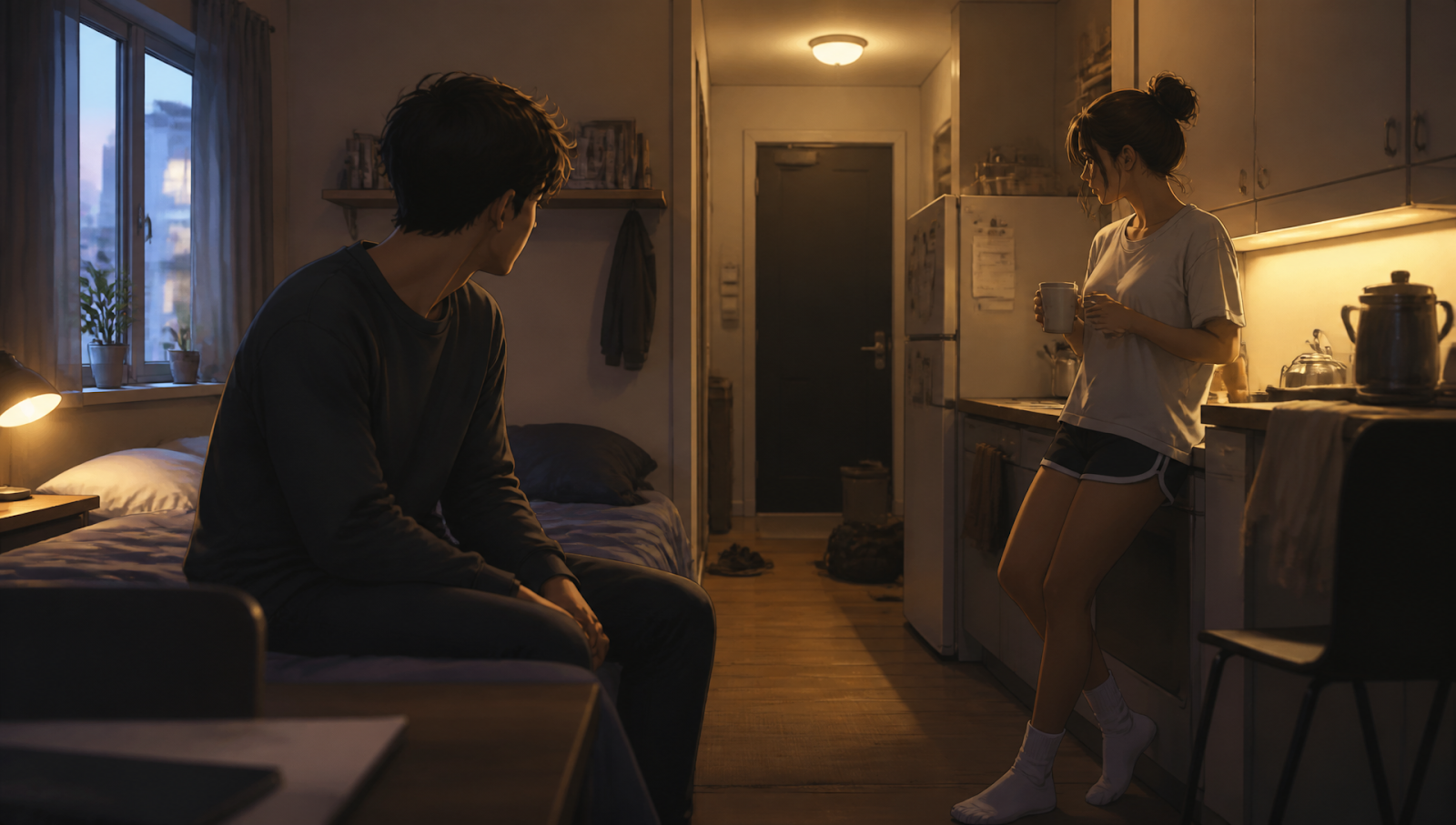
The series follows U-yun, a sophomore returning to college, who meets Jin-hyeong, a TA with an unusual charm and a careful way of speaking. A sudden confession pushes them into an even stranger situation: they end up living together in a studio apartment. From there, the story leans into their uneasy closeness, with U-yun acting on impulse and Jin-hyeong holding back in ways that keep the relationship off balance. The premise is small, but the show uses that small space well. It turns every glance, pause, and misunderstanding into part of the joke and part of the romantic tension.
Cast & Performances
The cast has to carry most of the show’s appeal through timing, and that matters more here than big emotional speeches. Shin Beom-sik gives U-yun a needy, impulsive energy that keeps the character from feeling flat. Kang Seong-woo makes Jin-hyeong feel guarded without turning him into a cold type, which is important because the show depends on his quiet charm. Jung Eui-jin also helps round out the dynamic by keeping the supporting side of the cast from becoming background noise. Because the series is built around tension and reaction, the voice work needs clean timing, and for the most part it lands.
Direction & Tone
Ji-bung keeps the material tight and does not waste time setting up the premise. That helps a lot, because the show could easily have felt stretched if it had lingered too long on the basic living arrangement. Instead, the direction keeps moving between embarrassment, curiosity, and romantic delay. The best choice here is restraint. The series does not try to overstate the comedy or the feelings, and that makes the more awkward moments feel sharper. At the same time, the direction is very dependent on the strength of the central hook. If the tension between the two leads weakens, the episode rhythm will have less to hold onto.
Visuals & Sound
The visual style makes the most of limited space. A studio apartment can look dull very quickly, but the framing keeps changing enough to make the room feel active. Close shots matter a lot in this show because so much of the comedy comes from reaction, hesitation, and distance that disappears too fast. The animation also helps sell the emotional weirdness of the premise by keeping faces expressive without overdoing it.
The music fits the tone rather than trying to dominate it. That is the right call for a series like this, where silence and awkward pauses matter just as much as the background sound. The score does its job when the show needs a light comic push or a little romantic pressure, but it never feels like the real star. Sound design is more useful here than a big theme, because the series depends on small shifts in mood.
This is the moment that sets the whole series in motion. It works because it feels impulsive rather than polished, which fits U-yun and immediately tells you the show is not interested in neat romance.
Moving the pair into one small space gives the series its best comic engine. The cramped setting keeps forcing interaction, and that creates both jokes and discomfort without needing extra plot clutter.
This scene is important because it shifts the tone from simple flirting to something more specific and strange. Jin-hyeong’s request to wait adds mystery, but it also changes the power balance between them.
The reveal about Jin-hyeong’s idea of physical intimacy is where the series leans hardest into its title’s promise. It is part joke, part character detail, and it gives the romance a more unusual shape.
This is where the show’s central question becomes clear. The episode builds on misunderstanding, desire, and hesitation, and that combination is what keeps the setup active instead of repetitive.
Pros & Cons
- Strong central chemistry between the two leads
- A premise that creates tension without needing a big plot
- Good use of a small setting
- Voice work supports the comedy well
- The show knows how to turn pauses into part of the joke
- The story could become repetitive if it leans on the same tension too long
- The premise depends heavily on chemistry, so weaker episodes would show quickly
- Some viewers may want a broader story beyond the apartment setup
Final Verdict
One-Room TA is a smart enough college romance to make a small setup feel useful, not limited. Its appeal comes from timing, awkward chemistry, and the way it keeps turning a single living arrangement into a source of comedy and tension. It is not trying to be bigger than it is, and that honesty helps. As a recent animated series, it feels strongest when it stays focused on the two leads and the strange balance between them. If that balance holds, the show should remain easy to follow and easy to enjoy. I would give One-Room TA a 7.5 out of 10.
Frequently Asked Questions
It follows a sophomore named U-yun and a TA named Jin-hyeong after a confession leads them into an unexpected shared studio apartment setup.
It is listed as Animation and Comedy, but the story clearly uses romance and awkward relationship tension as its main hook.
The verified networks listed are Viki and LAFTEL.
Ji-bung is credited as the director or creator.
If you like college-set animated comedies with awkward romance and close character focus, it is worth a look.
Related Titles You Might Like
- My Bias My Boss
- Barakamon
- Wotakoi: Love Is Hard for Otaku
- Horimiya
- Monthly Girls' Nozaki-kun