The Drop: A Snowfall Saga Review: Style and Strain
Director / Creator: Malcolm Spellman
The Drop: A Snowfall Saga arrives with a story that already has tension baked into it. Set in 1990s Los Angeles, it follows Wanda and Leon as they try to push West Coast rap into the mainstream while gang violence grows and record labels circle like they smell money. That setup alone gives the series a lot to work with, and the first impression is mixed in an interesting way: the world feels alive, the pressure feels real, but the show also feels like it is carrying a lot of familiar drama on its back. It’s a series with strong energy and a few rough edges, which makes it more interesting to watch than polished.
Is the Story Strong?
At its center, The Drop: A Snowfall Saga is about ambition meeting a dangerous business. Wanda and Leon are trying to make something larger than themselves, but the music scene around them is tied to control, profit, and power. The series uses 1990s Los Angeles as more than a backdrop. It turns the city into a place where success and danger keep brushing against each other. Because this is a drama built around culture, money, and street politics, the story works best when it keeps those forces in the same frame instead of separating them into neat lanes.
Do the Performances Work?
Gail Bean and Isaiah John give the series its strongest pull. They carry the emotional weight of people who want more than the world keeps offering them, and that mix of drive and fear comes through clearly. Asante Blackk and Peyton Alex Smith also add a lot of life to the show, especially in scenes where the bigger picture starts to feel personal. Mykelti Williamson and Nicki Micheaux bring welcome gravity, while Brandon Mychal Smith, Isidora Goreshter, and Eric Balfour help fill out a world where no one feels outside the game for long. The cast is not flawless, but it feels committed. Even when a scene is underwritten, the actors usually keep it moving.
How Is It Directed?
Malcolm Spellman directs the material with a clear sense of mood and pressure. He seems more interested in how ambition changes people than in simply checking off crime-drama beats. That helps the series feel grounded, even when the story leans on familiar rise-and-fall ideas. The pacing is the main thing that keeps the direction from feeling fully confident. Some scenes breathe in a good way, letting the setting and tension build. Others move a little stiffly, as if the show is still deciding how much of the conflict it wants to hold back. Still, there’s a steady hand here, and the series rarely looks lost.
Visual Style
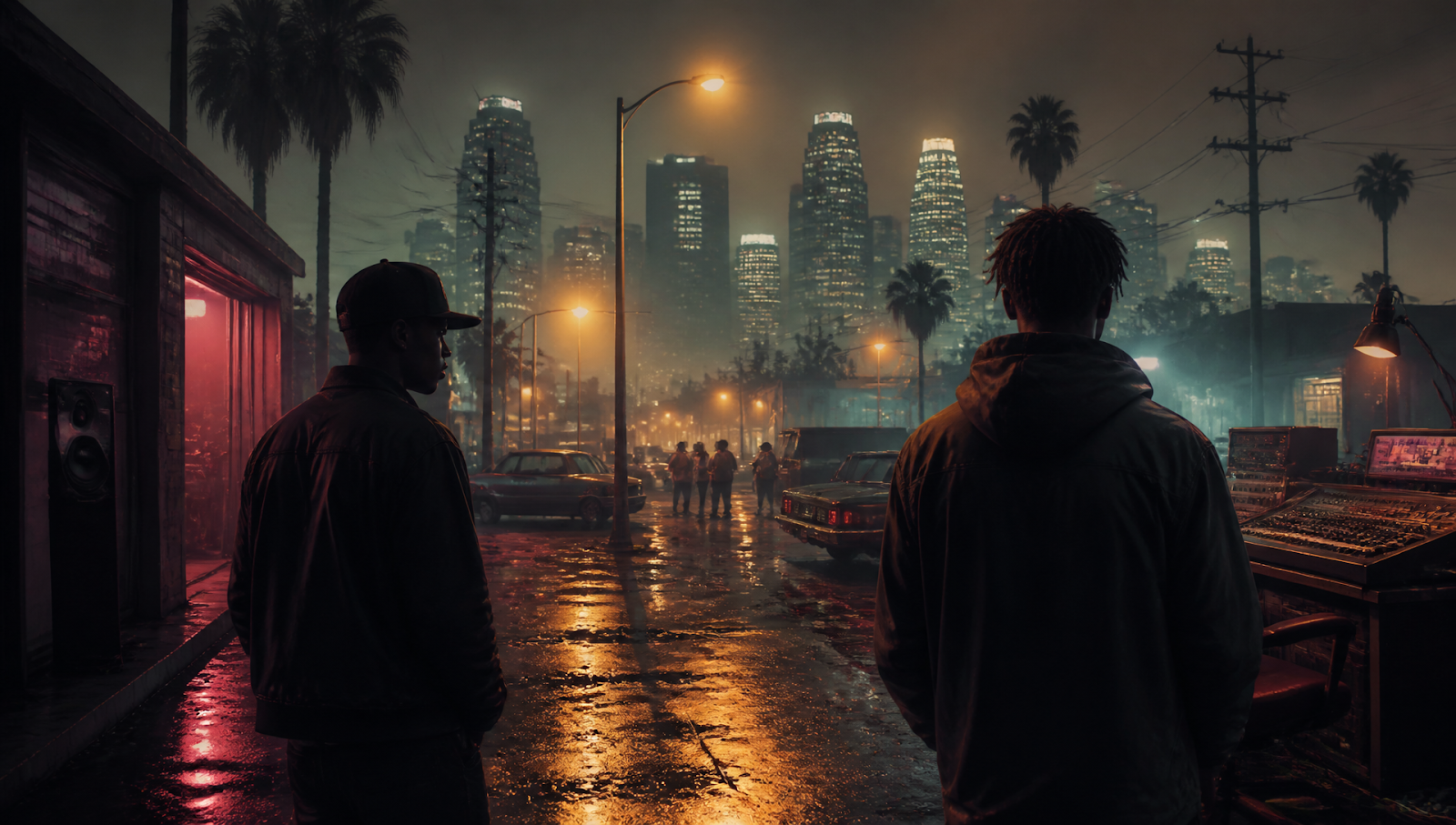
Visually, the series leans into the grit of 1990s Los Angeles without making everything look washed out or dull. The best shots give the city a lived-in feel, with street corners, interiors, and industry spaces all feeling like parts of the same struggle. The camera work is solid more than flashy, which fits the material. It doesn’t always reach for a big visual signature, but it does enough to keep the world believable.
Sound and Music
The sound work matters a lot here, and it does its job well. Since the story is about rap breaking into the mainstream, the music can’t just sit in the background. It has to feel like part of the struggle. The series uses sound to build tension and identity, and that helps give the drama more shape. Even when a scene is uneven, the audio keeps reminding you that music is the real battleground.
The early stretch of the series makes it clear that Wanda and Leon are not just chasing fame. They are trying to change the place hip hop holds in the wider music world, and that gives the story real stakes before the violence fully takes over.
One of the better parts of the show is how quickly label interest starts to feel less like support and more like a trap. The series understands that attention can be flattering and dangerous at the same time.
As the gang conflict grows, the show does a solid job of making it feel like success is happening inside a tightening circle. The tension comes less from big shocks and more from the sense that every move has a cost.
The series is sharpest when it shows how people outside the music scene try to turn hip hop into a product. That angle gives the drama a sharper edge than a simple crime story would have.
By the later stretch, the most memorable moments are the quiet ones, when the characters seem to realize how much they’ve already given up just to keep moving forward.
Biggest Strengths
Strong lead performances from Gail Bean and Isaiah John. A setting that feels rooted in time and place. Good tension between music ambition and street danger. Solid supporting cast energy. Sound and atmosphere support the drama well
Biggest Problems
Some story beats feel familiar. The pacing can be uneven. The show sometimes leans on familiar crime-drama pressure. A few scenes feel more functional than sharp
Final Verdict
The Drop: A Snowfall Saga has enough style, tension, and cast power to make a real case for itself, even if it doesn’t always feel fully locked in. Malcolm Spellman gets strong work out of the setting and the performers, and the series is at its best when it treats hip hop success as something fragile, contested, and expensive. It’s not a perfect start, and the familiar parts are hard to ignore, but there’s enough here to keep watching. Rating: 6.5/10.
Frequently Asked Questions
If you like drama series about music, ambition, and street-level tension, it’s worth a look. The cast and setting do a lot of the work.
It follows Wanda and Leon in 1990s Los Angeles as they try to take West Coast rap mainstream while gang wars and record labels shape the fight around them.
Malcolm Spellman is the creator/director listed for the series.
The series is set to air on FX.
Related Titles You Might Like
- Snowfall
- Atlanta
- Wu-Tang: An American Saga
- The Get Down
- P-Valley