Collision Review: A Family Fight After a Fatal Crash
Director / Creator:
Collision opens with a sharp setup: a business titan is dead, the crash that killed Miguel Ángel is wrapped in mystery, and the fight over his company starts before the grief has even settled. That immediate pressure is the show’s best tool. The Collision review question is simple: does the series keep that pressure moving, or does it stretch the tension too thin? The answer is mixed. It has a strong soap-drama hook and real family conflict, but the momentum slips in places where the show seems more interested in delay than escalation.
Is the Story Strong?
The story centers on Miguel Ángel’s death and the battle that follows. His daughter Zoé and his estranged wife Belén move into a struggle for control of his company, and the crash hanging over the family gives every exchange a sharper edge. The setup is clear and easy to follow, which helps the series get moving fast. What keeps it interesting is the way personal grief and business power are tied together. The problem is that the plot sometimes slows down more than it should, especially when it leans on repeated clashes instead of fresh pressure. Still, the core conflict is strong enough to hold attention, and the mystery around the crash gives the drama a useful pulse.
Do the Performances Work?
The cast does a lot of the heavy lifting here. Margarita Rosa de Francisco and Macarena Achaga give the material its main force, and their scenes carry the most weight because they understand that this story works best when anger and restraint are fighting each other. Diego Klein, Christian Vazquez, Juan Pablo Castañeda, Ana Belén Aguilar, Armando Espitia, Leonardo Daniel, Jorge Caballero, and Mayra Sérbulo help fill out a world where almost every conversation feels like it has a second meaning. The performances are strongest when characters are pushing for control without saying everything out loud. Some stretches are less convincing when the script leans into soap-opera heat, but the cast keeps the series grounded more often than not.
How Is It Directed?
Because the director or creator is not listed, the direction has to be judged through the show’s choices rather than a known authorial stamp. Collision is at its best when it trusts silence, pauses, and the awkward space between family members who no longer trust each other. Those slower moments earn their place. They give the larger fights more bite. The weaker stretches come when the series keeps circling the same conflict without adding a new angle. That’s where the pace feels stalled. It doesn’t need to rush, but it does need to keep tightening the screw, and it doesn’t always do that.
Visual Style
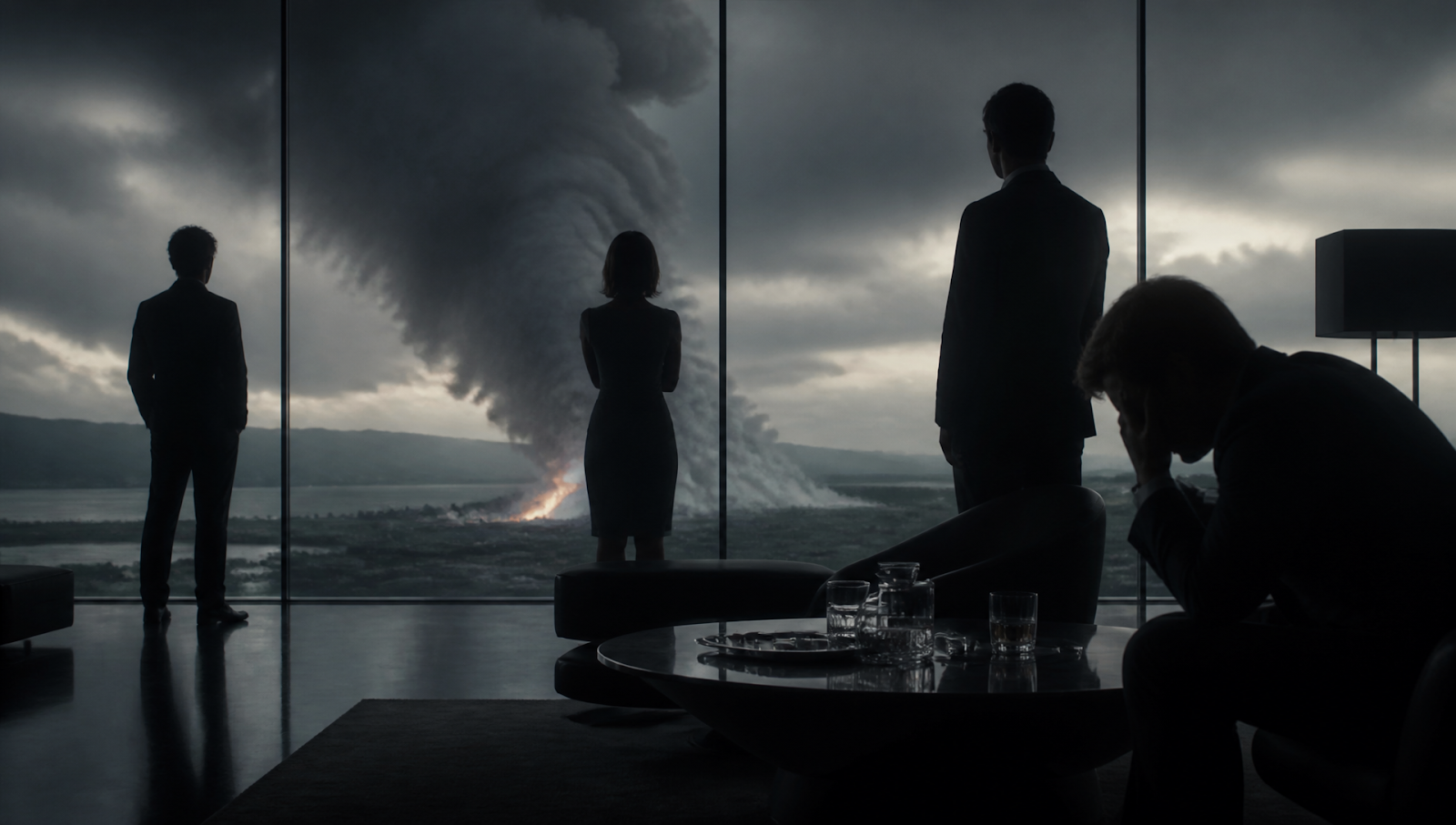
Visually, the series seems built for polished boardroom tension and private family conflict rather than flashy style. That choice makes sense. Clean framing and controlled spaces fit a story about wealth, inheritance, and public image. The best images are the ones that trap characters inside elegant rooms that still feel cold. The show does not need showy camera tricks. It needs pressure, and the visual setup appears to understand that.
Sound and Music
The sound work supports the drama without drawing too much attention to itself. That fits the material. Collision needs a score that nudges the mood rather than tells the viewer what to feel. When it stays light, the tension lands better. When it swells too much, it risks making scenes feel more obvious than they should be.
The opening setup works because it gets to the central loss quickly. The crash is not treated like a simple plot device. It immediately changes the power balance and gives the story a reason to move.
This is where the series finds its best tension. The pace picks up because the conflict is no longer abstract. It becomes personal, and the show gets sharper when it lets the two women share the screen with real distrust.
These scenes slow down a little, but not in a bad way. They let the business fight take shape and show how control of the company is tied to family pride. The risk is repetition, since the same argument can start to feel recycled.
As the mystery around Miguel Ángel’s death deepens, the story gets its strongest second wind. The pace improves because the show gives viewers a reason to keep asking what really happened, not just who gets power.
The quieter moments here are important. They give the series some breathing room and make the conflict feel less mechanical. When the show slows down with purpose, it works better than when it simply delays the next argument.
Biggest Strengths
Strong central premise. Family conflict that feels immediate. Good use of mystery around the crash. Cast brings energy to tense scenes. Quiet moments often improve the pace
Biggest Problems
Some scenes repeat the same argument. Soap-opera tone can feel heavy. The pace drags when new information is thin. Business conflict is not always as lively as the personal drama
Final Verdict
Collision has a solid premise and enough tension to keep it watchable, but it does not stay sharp all the way through. The crash mystery and the fight between Zoé and Belén give it a strong start, and the cast helps the story feel alive. Even so, the pacing is uneven, and a few stretches rely too much on repetition. If the series keeps tightening its grip, it could grow into something more satisfying. For now, it’s a promising but inconsistent drama. Rating: 5/10.
Frequently Asked Questions
It follows the aftermath of Miguel Ángel’s mysterious crash death as his daughter Zoé and estranged wife Belén fight for control of his company.
It’s listed as both Drama and Soap, and the show seems to use family conflict and business power struggles as its main engine.
Collision is set to stream on HBO Max.
It may be worth a try if you enjoy tense family dramas and company power battles, but the pacing can be uneven.
Related Titles You Might Like
- Succession
- Monarch: Legacy of Monsters
- The White Lotus
- La Reina del Sur
- Dirty John